
Table of contents

Seeing strands of hair on your pillow, in the shower drain, or caught in your brush can be quite alarming. Many people’s first thought is often a simple yet distressing one: “I’m losing my hair.” However, hair issues are rarely that clear-cut. What may seem like hair loss could actually be hair breakage. Treating one as if it were the other can not only delay results but sometimes even worsen the situation.
Hair fall and hair breakage are frequently discussed as if they’re the same problem. In truth, they are distinct conditions with unique causes, timelines, and solutions. Grasping this difference is crucial for anyone seeking genuine improvement instead of just temporary fixes. This is precisely where Korean Microscopic Diagnosis starts to shift the conversation about hair health.
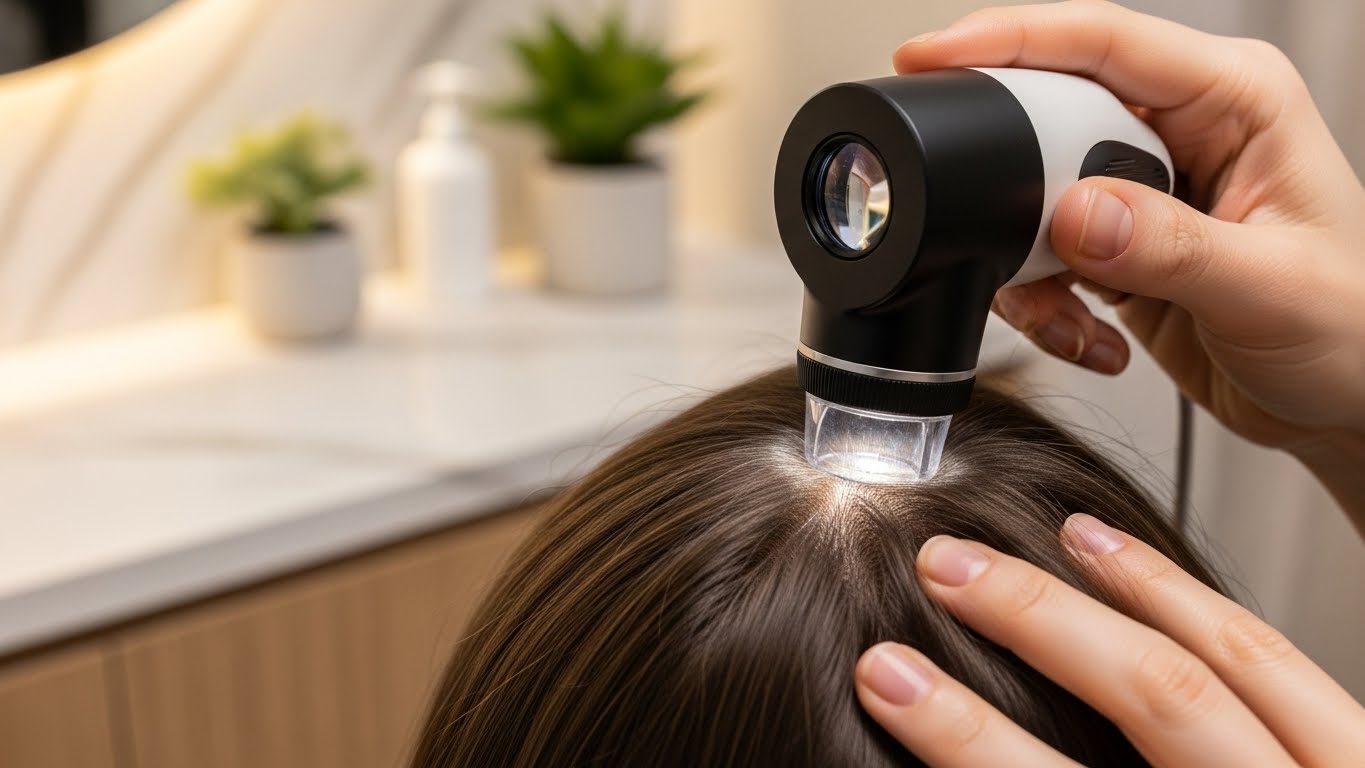
Rather than relying on assumptions or superficial signs, Korean Microscopic Diagnosis enables professionals to take a closer look at what’s really happening at the scalp and along the hair shaft. With this clarity comes confidence, and with the right diagnosis, you can receive the appropriate care.
Understanding Hair Fall: What Is Normal and What Is Not

Hair fall is just a normal part of how our hair grows. Each hair on your scalp goes through different stages: growing, transitioning, and resting. When a hair reaches the end of its life, it falls out to make space for new growth. This whole process happens all the time, often without us even noticing.
For most individuals, losing around fifty to one hundred strands a day is considered normal. These hairs usually have a small white bulb at the root, which indicates they have completed their natural cycle. This kind of shedding does not affect overall hair density.
Concerns arise when hair fall becomes excessive or persistent. You may notice more hair than usual on your pillow, in the shower, or on your clothes. Over time, this can lead to visible thinning, a widening part line, or areas where the scalp becomes more noticeable.
Abnormal hair fall is often linked to what is happening beneath the surface. Hormonal changes, prolonged stress, nutritional deficiencies, illness, inflammatory scalp conditions, or sudden lifestyle shifts can disrupt the growth cycle. This is why relying on visual observation alone often falls short, and why tools like Korean Microscopic Diagnosis are increasingly valued in modern hair care.
Because hair fall originates at the scalp level, identifying the real trigger requires insight into follicle behaviour, scalp balance, and growth patterns, something Korean Microscopic Diagnosis is specifically designed to reveal.
Hair Breakage Stage When the Hair Snaps Instead of Sheds

Hair breakage is quite different from hair fall, even if they can appear equally concerning. Breakage happens along the hair shaft rather than at the root, causing the hair to snap before it can finish its natural growth cycle.
You’ll often notice broken strands are shorter and uneven, lacking the white bulb that you see in hair that naturally sheds. This breakage typically manifests as frizz, a rough texture, diminished shine, and hair that seems stuck at a certain length.
This kind of damage usually stems from external stressors. Regular heat styling, chemical treatments, excessive brushing, tight hairstyles, and rough handling can all weaken your hair over time. Additionally, an imbalance between protein and moisture can leave your strands either too brittle or too soft, making them more susceptible to snapping.
Without a proper analysis, breakage can easily be confused with hair loss. Korean Microscopic Diagnosis can help clarify the difference by examining the hair shaft under high magnification, revealing damage patterns that would otherwise go unnoticed.
Taking Care Your Hair Is Not Enough

A lot of folks try to figure out their hair issues by inspecting strands in their hands or matching their symptoms with advice they find online. While this can help raise awareness, it seldom leads to accurate solutions.
Hair fall and breakage often go hand in hand. You might be losing hair from the root while also dealing with damage along the hair shaft. Without a closer look, it’s nearly impossible to determine how much of the issue stems from the scalp versus how much is due to weakened strands. This is a big reason why Korean Microscopic Diagnosis has become such an essential part of professional hair evaluations.
The scalp itself is crucial, yet it often goes unnoticed. Issues like congestion, inflammation, excess oil, or early changes in the follicles can quietly disrupt healthy growth long before any visible signs show up. Korean Microscopic Diagnosis helps catch these early warning signs before they turn into bigger problems.
Korean Microscopic Hair and Scalp Diagnosis
Korean Microscopic Diagnosis is all about precision, prevention, and personalization. Rather than providing one-size-fits-all solutions, it dives deep into understanding each person's unique scalp and hair condition before suggesting any treatments.
At its heart, this approach employs cutting-edge digital magnification to take a close look at both the scalp and hair strands in real time. This means that professionals can evaluate hair and scalp health based on what they actually see, rather than relying on guesswork.
Scalp Condition
A detailed microscopic scalp assessment evaluates inflammation, sensitivity, dryness, excess oil production, and surface congestion. These factors directly affect the scalp’s ability to support healthy hair growth.
Early signs of imbalance often invisible to the naked eye can be identified, allowing concerns to be addressed before they progress into chronic issues such as irritation, flaking, or hair thinning.

Follicle Activity
Using Korean Microscopic Diagnosis, follicle behavior is closely observed to determine whether follicles are active, sluggish, or dormant. This insight reveals how effectively follicles are producing hair, the growth phase they are in, and whether strands are emerging strong or progressively weakened. Understanding follicle vitality is essential for addressing density and regrowth concerns.

Hair Shaft Structure
Microscopic analysis of the hair shaft highlights variations in thickness, elasticity, and uniformity from root to tip. Irregularities can signal internal weakness, protein depletion, or damage caused by heat styling, chemical processing, or mechanical stress. Identifying these vulnerabilities helps reduce breakage and supports the restoration of stronger, more resilient strands.

Cuticle Health
The condition of the hair cuticle is examined to detect lifting, cracking, or erosion. Compromised cuticles expose the inner cortex, increasing vulnerability to moisture loss, friction, and environmental damage.
Clear visualization of cuticle integrity enables more targeted strengthening and protective care recommendations.

Sebum and Buildup Levels
Microscopic examination reveals excess sebum, product residue, and environmental buildup that can block follicles and restrict oxygen and nutrient flow.
Identifying congestion early helps prevent follicle suffocation, scalp imbalance, and slowed growth, allowing for precise cleansing and scalp-balancing solutions.

This method is non-invasive, discreet, and highly informative. By using Korean Microscopic Diagnosis, professionals can build treatment strategies based on facts rather than trends.
Microscope Clearly Shows The Difference Between Breakage vs Hair Fall

Understanding whether hair concerns stem from shedding or breakage is essential for effective treatment. While both may appear similar at first glance, their causes and solutions are very different. Microscopic evaluation allows these distinctions to be identified with clarity and precision.
Understanding Hair Fall vs Breakage
When examined under high magnification, the difference between hair fall and hair breakage becomes clearly distinguishable. This level of analysis allows the root cause of hair loss concerns to be identified accurately, ensuring the right corrective approach is taken rather than relying on surface-level assumptions.
Signs of Hair Fall
Hair fall is identified by strands that detach fully from the scalp, often with a visible white bulb at the root. Microscopic evaluation may also highlight contributing scalp factors such as follicle congestion, inflammation, weakened anchoring, or disrupted growth cycles. These indicators point toward internal or scalp-related imbalances that lead to excessive shedding rather than damage along the hair length.
Signs of Hair Breakage
Breakage presents very differently. Instead of complete strands, fractured hair ends, uneven shaft thickness, and surface cuticle damage are observed. The follicles themselves typically appear intact and active, confirming that the issue originates within the hair fibre. This type of damage is commonly associated with heat styling, chemical treatments, friction, or loss of structural strength.
When Both Conditions Are Present
One of the most valuable benefits of Korean Microscopic Diagnosis is its ability to identify overlapping concerns. In cases where both hair fall and breakage occur simultaneously, the assessment ensures neither condition is misdiagnosed or overlooked.
Understanding whether hair concerns stem from shedding or breakage is essential for effective treatment. While both may appear similar at first glance, their causes and solutions are very different. Microscopic evaluation allows these distinctions to be identified with clarity and precision.
Right Diagnosis Changes the Treatment Approach

Once insights from Korean Microscopic Diagnosis are established, the treatment process becomes highly targeted and intentional. Rather than relying on guesswork, care is guided by visible evidence of scalp and hair behaviour.
Hair fall is best addressed through scalp focused solutions that aim to rebalance the environment and support healthy follicle function. Treatments are adjusted over time based on how the scalp responds, ensuring long term improvement rather than temporary relief. Hair breakage, in contrast, requires strengthening and restorative protocols designed to reinforce the hair shaft and protect its structure.
Progress is monitored through visible changes in strand integrity, elasticity, and surface smoothness. Personalisation remains essential throughout the journey. With continued evaluation, care evolves alongside the hair’s changing condition, allowing both scalp health and hair strength to improve in harmony.
When Should You Consider Microscopic Diagnosis

There are certain situations where a thorough evaluation of your hair and scalp becomes really crucial. If you're experiencing ongoing shedding, noticeable changes in texture, or thinning after stressful times, illness, or hormonal shifts, these could be signs of deeper imbalances that aren't immediately visible. In these instances, just using surface treatments might not tackle the real issue.
Jumping into supplements or intensive therapies without getting to the root cause can lead to a lot of frustration and disappointing results. Korean Microscopic Diagnosis provides early insights by pinpointing what's actually going on at the scalp and fiber level. This approach helps protect your long-term hair health while steering clear of unnecessary or unsuitable treatments.
Conclusion: Understanding Comes Before Results

Hair fall and hair breakage may appear similar, yet they reflect very different underlying concerns. Without clear understanding, even the most advanced products or routines may fail to deliver lasting results.
Korean Microscopic Diagnosis brings precision to hair care by uncovering details invisible to the naked eye. This deeper insight allows for targeted, personalised strategies that honour individual hair needs and support long term improvement rather than temporary fixes.
Healthy hair begins with understanding. With the clarity provided through Korean Microscopic Diagnosis, that understanding becomes not only achievable, but truly transformative.
FAQs
1. What is Korean Microscopic Diagnosis?
It’s a detailed hair and scalp analysis using high magnification to detect hair fall, breakage, and scalp issues.
2. How can I tell hair fall from hair breakage?
Hair fall detaches from the root with a white bulb; breakage snaps along the shaft without the bulb.
3. Why is scalp health important?
A healthy scalp supports follicles, prevents hair fall, and promotes strong, resilient hair.
4. Can hair breakage and hair fall occur together?
5. How does this diagnosis help in treatment?
It enables personalized care, addressing hair fall at the root and breakage along the hair shaft.



Share:
Seasonal Hair Fall in Dubai: Why Hair Fall Spikes and How to Reset Your Growth Cycle
PCOS and Hair Thinning: A Korean Style Scalp Protocol That Supports Hormonal Hair Changes