Table of contents

Hair thinning can be a deeply personal experience. For many women dealing with PCOS, it goes beyond just how they look; it touches on their identity, confidence, and emotional health. While issues like irregular cycles or acne often get the spotlight, hair thinning tends to be a quieter struggle that can be even more distressing. It often creeps in slowly, manifesting as widening parts, less volume, or shedding that feels completely out of control. What makes hair thinning related to PCOS particularly tough is that it stems from internal factors.
Hormonal imbalances, inflammation, and changes in the scalp all play a role in ways that typical hair care routines often overlook.In recent years, a more thoughtful approach has started to gain traction. Korean-style scalp care emphasizes restoring balance at the scalp level rather than just covering up hair loss. Instead of resorting to harsh treatments or quick fixes, it focuses on long-term follicle health, comfort, and consistency. For women experiencing hormonal hair changes, this method provides clarity, structure, and a sense of reassurance.
This article delves into how PCOS impacts hair growth, why many common solutions fall short, and how a Korean-inspired scalp protocol can promote healthier hair during hormonal transitions.
Understanding PCOS Related Hair Thinning

PCOS has a significant impact on how the body manages hormones, especially androgens. While these hormones are found in all women, they tend to be higher or more active in those dealing with PCOS. Hair follicles, particularly around the crown and parting, are quite sensitive to androgen levels. Over time, exposure to these hormones can cause the follicles to shrink. This leads to a shorter hair growth phase, resulting in strands that become finer, weaker, and shorter with each cycle.
The hair thinning associated with PCOS doesn’t happen overnight. It’s a gradual process that can be emotionally draining. One month, your hair might feel a bit flatter, and the next, you might notice your scalp becoming more visible in certain lights. This slow change can often lead to confusion and a delay in taking action.
In addition to hormonal changes, the scalp itself undergoes transformations. You might experience increased oiliness, chronic inflammation, and reduced blood flow. These factors create an environment where hair follicles struggle to perform optimally. Even if your body has the necessary nutrients, the scalp may not be able to transport them effectively to the hair roots.

That’s why it’s important to understand that hair thinning from PCOS isn’t just a simple issue of hair loss. It’s a complex condition that involves the endocrine system, the scalp barrier, and follicular circulation all working together. Focusing solely on the hair strands overlooks the real source of the problem.
Traditional Hair Care Often Falls Short

Many women with PCOS try everything when hair thinning starts. Volumizing shampoos, oils, supplements, and salon treatments often come first. Some help hair look better for a while, but the results rarely last.
That’s because most of these solutions focus on appearance, not the scalp or follicles where hair growth actually begins. Heavy products can clog the scalp, supplements cannot fix hormone sensitivity on their own, and harsh treatments often irritate an already delicate scalp, sometimes making shedding worse.
What’s usually missing is a gentle, consistent plan. PCOS related hair thinning needs a thoughtful approach that supports the scalp and works with hormonal changes, not against them.
The Korean Philosophy of Scalp Health

Korean hair care is rooted in a simple but powerful idea. Healthy hair begins with a healthy scalp. In Korean wellness culture, the scalp is treated as living skin, much like the face. It requires cleansing, nourishment, circulation, and protection in equal measure.
Rather than focusing on fast regrowth, Korean scalp care emphasizes balance. This means calming inflammation before stimulation, detoxifying gently without stripping, and strengthening the scalp barrier so follicles can function naturally.
Another defining aspect is consistency. Korean protocols are not about one time treatments. They are built around regular care that evolves with the scalp condition. This approach aligns well with PCOS, where hormonal fluctuations require adaptability rather than rigidity.
Korean scalp care also avoids unnecessary aggression. Instead of forcing growth through intense stimulation, it supports the scalp so that growth can resume on its own timeline. For women who have experienced frustration or burnout from trying too many solutions, this philosophy often feels reassuring.
A Korean Style Scalp Protocol for PCOS Hair Thinning
A well designed scalp protocol begins with understanding. No two PCOS experiences are identical, which is why personalized assessment is essential.
Scalp Diagnosis and Mapping
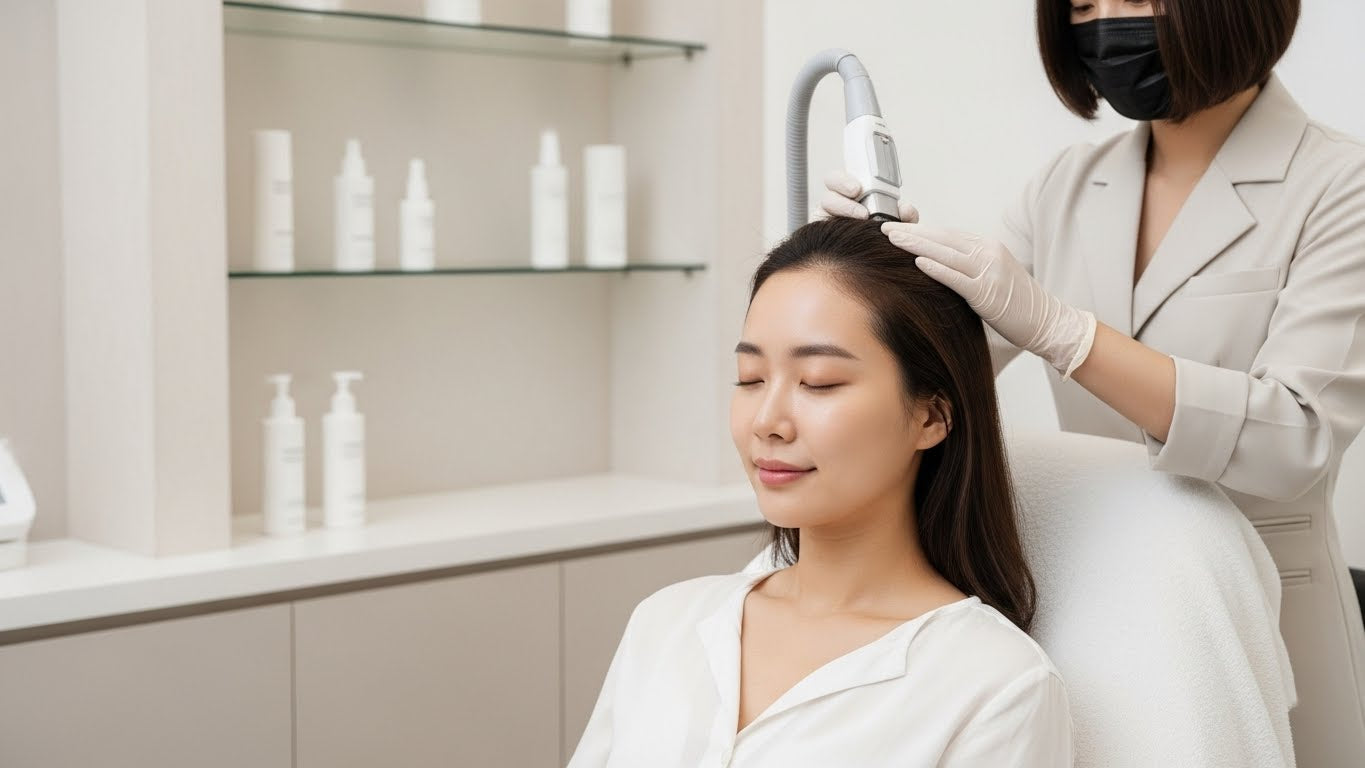
The first step is all about taking a close look at your scalp. We’ll check out things like how dense your hair follicles are, the thickness of your hair shafts, oil levels, any redness, and how sensitive your scalp might be.
We’ll also pinpoint areas where hair is thinning and look for any signs of congestion or inflammation.This diagnostic phase is crucial. It makes sure that the treatment plan is tailored to actual scalp issues instead of just making guesses.

Gentle Scalp Detoxification
Hormonal imbalances can often trigger an increase in sebum production. As time goes on, this oil can oxidize and combine with leftover product, leading to blockages around hair follicles. A gentle detox can help clear away this buildup without harming the scalp's natural barrier.
Korean-inspired detox methods focus on gentle botanical ingredients and careful exfoliation. When hair follicles are free from congestion, they can absorb oxygen and nutrients much more effectively. This step often reduces itching, heaviness, and discomfort.

Microcirculation and Follicle Support
Once your scalp is feeling clear and calm, the next step is to focus on boosting circulation. Good blood flow is crucial for supplying essential nutrients to your hair follicles. Korean scalp therapy employs specific massage techniques and gentle stimulation to promote circulation without overwhelming the scalp.
This process supports follicles that are dormant or weakened by hormonal influence. Rather than forcing them into growth, it creates conditions where growth becomes possible again.

Hormone Aware Scalp Nourishment
Not every hair growth ingredient is a good fit for scalps that are sensitive to hormones. A Korean-style approach utilizes special formulations aimed at promoting follicle health while keeping hormonal balance in check.
These ingredients might include peptides, soothing plant extracts, and compounds that help strengthen the barrier. The emphasis here is on building resilience instead of rushing the process. This step is especially important for women who have experienced scalp sensitivity or adverse reactions to conventional hair loss products.

Maintenance and Home Care Rituals
Consistency transforms treatment into results. Home care routines are intentionally simple. Overwashing is avoided, as is heavy styling. Cleansing schedules are adjusted to support oil balance without stripping.
Women are also guided to pay attention to stress levels, sleep quality, and overall well-being. While scalp care is central, it works best when supported by lifestyle awareness. This maintenance phase ensures that progress continues steadily and sustainably.

Results Look Like for Women with PCOS

When you dive into the Korean style scalp protocol, you'll find that the results come on slowly but surely, and they really do make a difference. In the first few weeks, many women begin to notice that their hair shedding decreases and their scalp feels more comfortable. Oil production tends to even out, and any itching or tightness usually starts to fade away. After a couple of months, you might even notice your hair feeling thicker at the roots, with those little baby hairs popping up along your part or hairline.
As time passes, the overall health of your hair gets better, with strands feeling stronger and more resilient. Just remember to keep your expectations in check; hormonal changes in hair can take a while to show. Progress is something you’ll witness over months, not just days. Being upfront about this helps build trust and can ease any worries you might have about the results.
Who This Approach Is Best For

This scalp protocol is well suited for women diagnosed with PCOS who are experiencing thinning or chronic shedding. It is also beneficial for those with post-pill hormonal changes, stress-related hair loss, or sensitivity to aggressive treatments.
Women who value discreet, premium care and prefer noninvasive methods often find this approach aligns with their expectations. It is particularly appealing to those who want to understand their hair loss rather than simply mask it.
Conclusion: Supporting Hair Through Hormonal Change

PCOS related hair thinning can feel isolating, but it is not something that must be accepted without support. When hair loss is approached with understanding and structure, progress becomes possible. Korean style scalp care offers a calm, intelligent pathway forward.
By focusing on scalp health, hormonal sensitivity, and long term balance, it supports hair through change rather than fighting against it. For many women, this approach restores more than hair. It restores confidence, clarity, and a sense of control during a challenging chapter.
FAQ's
1. What causes hair thinning in women diagnosed with PCOS?
PCOS hair thinning is caused by hormonal imbalance that affects hair growth cycles and weakens follicles over time. It often appears as reduced density along the scalp rather than sudden hair fall.
2. How can Korean scalp care support hair affected by hormonal changes?
Korean scalp care focuses on restoring scalp balance and improving circulation to support healthier hair growth. It treats the scalp as skin, not just a surface for hair products.
3. Is hormonal hair loss from PCOS something that can be managed?
Hormonal hair loss can be managed when addressed early with scalp focused care and medical guidance. Consistent treatment helps support stronger and more resilient hair growth.
4. How long does a PCOS focused hair treatment usually take to show results?
PCOS hair treatment results develop gradually as the scalp environment improves over time. Most people notice reduced shedding before visible density changes.
5. Who should consider professional scalp therapy for hair thinning?
Scalp therapy is suitable for individuals experiencing thinning linked to hormones or chronic scalp imbalance. It offers a gentle and structured approach to long term hair support.


Share:
Breakage vs Hair Fall: How Korean Microscopic Diagnosis Tells the Difference
Hard Water & Hair: The Luxury Korean Detox Ritual for Mineral Buildup in Dubai